
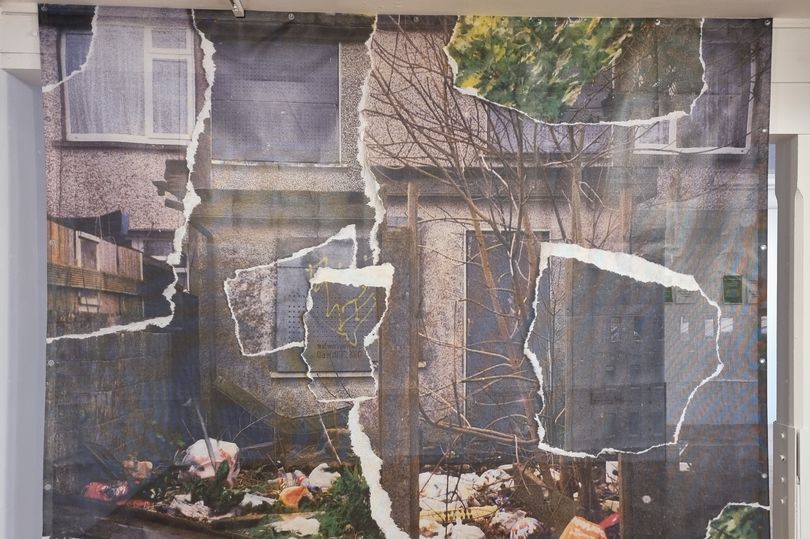
Since the financial crash of 2008, housing has emerged as a central issue of a great many urban and rural spaces. In many major cities, practices of 'land banking' by developers, often involve hoarding unused and/or derelict housing stock until market conditions, availability of finance, building costs or the political context is conducive to developing the site. In the mean time, the property lies vacant, sometimes falling into states of disrepair and dereliction. The developer will often employ private security to exclude squatters or other forms of 'meanwhile use' from these spaces. In this context, the problem of derelict housing has emerged as a chronic issue in the urban and rural fabric. In Ireland, for instance, unused land is prevalent most small and medium sized towns, as well as all of the cities.
It is important to understand this in the broader socio-economic context. So we begin by asking why it is helpful to theorise this question of dereliction, exploring the potential of theory to reframe what is normal, acceptable or obvious. Theory helps us to go beneath the surface of events and connect the problem to deeper structural phenomena. We will look at two theorisations of dereliction: (1) We look at the social crime analysis; and (2) the analysis of contemporary capitalist modes of value extraction, rentier economies and land banking
We will then explore the case study of Ireland. We will look at the legal framework around dereliction. There are essentially three key factors (1) the definition of dereliction; (2) the role of local authorities in identifying and registering derelict properties; and (3) their role in levying fines. As part of this, we will begin to develop key research skills, where students become sleuths, identifying property owners through the land registry (landdirect.ie), and the planning portal; identifying whether properties are already on the dereliction register; learning to file freedom of information requests regarding properties and other key legal research techniques. We will explore the reasons why the system has not worked as its publicity suggested it might, exploring the institutional capture of successive governments by the developer’s lobby. We will think about how the system might be reformed, and given the failure of successive governments to address the issue, how social activism might be important to push for change.
Readings:
- Anois, Derelict Ireland, The Solutions
- Runfola and Hankins, Urban Dereliction as Environmental Injustice, Acme Journal
- Smith and Wood, 'The Edges of Owner-Occupation versus Rentier Capitalism' Housing, Theory, Society (2025)